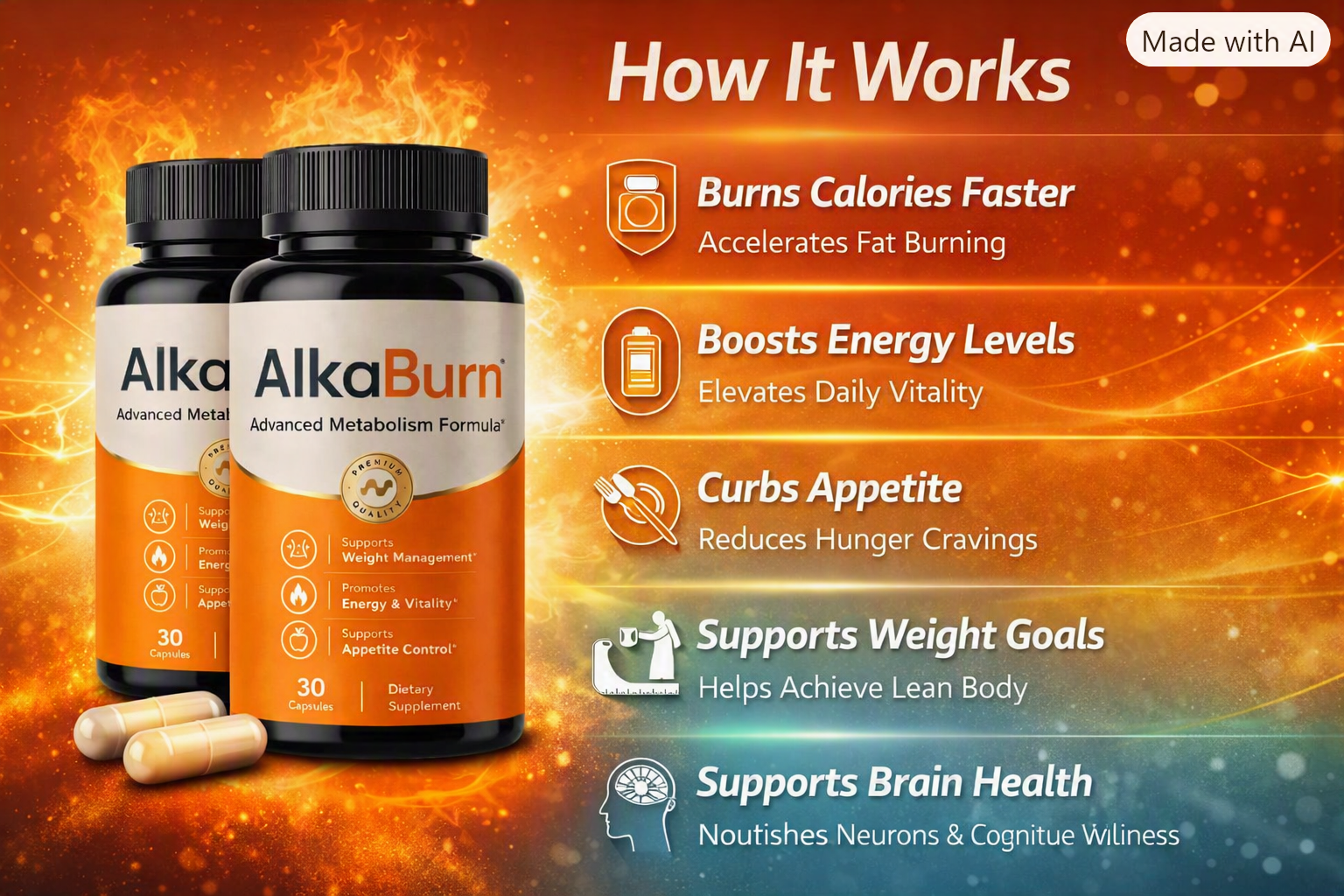
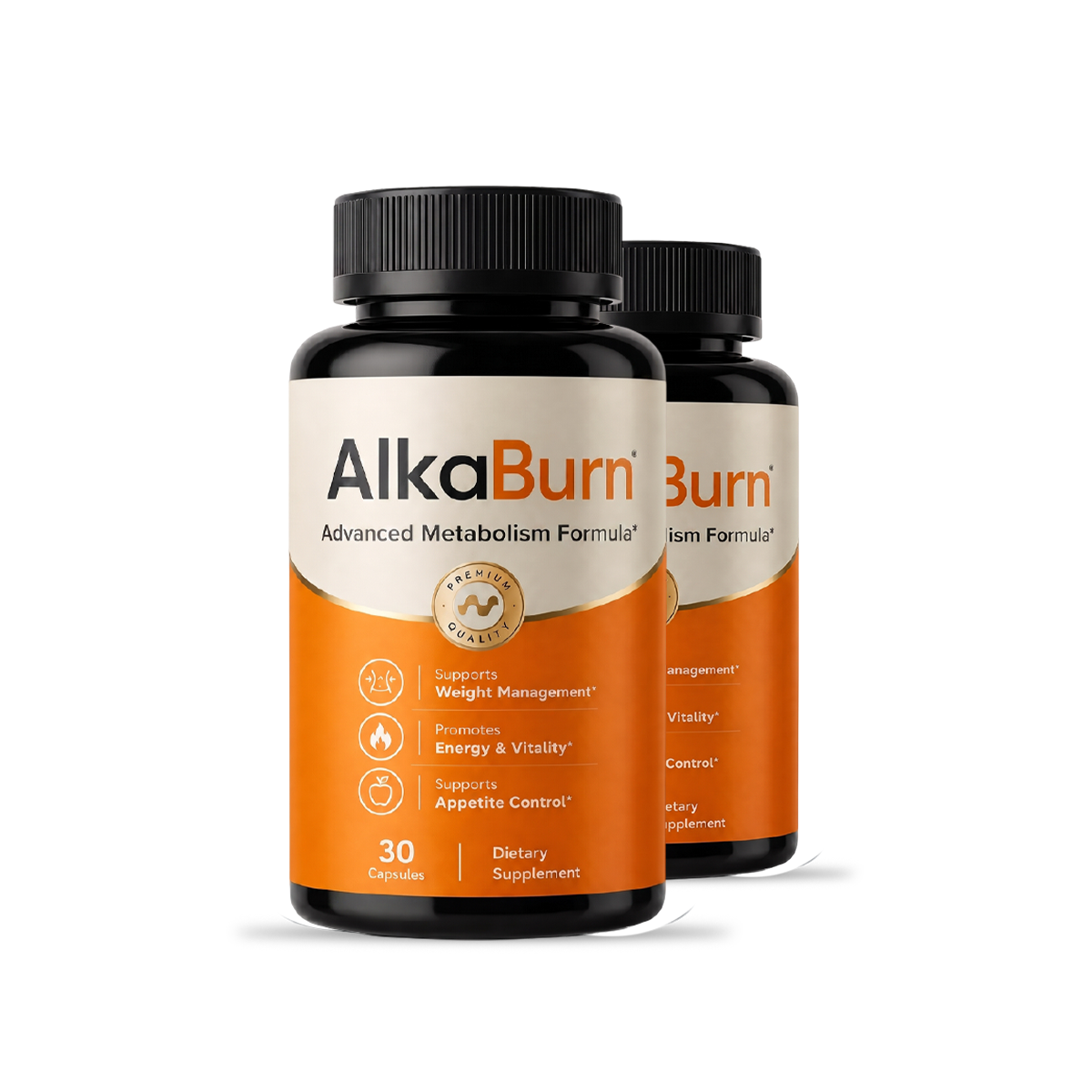
AlkaBurn Review 2026: We Tried It — An Honest 90-Day Account
Ninety days, weekly waist measurements, and a result that is real, modest and not cleanly attributable.
Marcus D.
What happens after 90 days of AlkaBurn?
Ninety days covers a period over which body composition changes become measurable. Users who report benefit typically describe an immediate energy effect from caffeine that diminishes with tolerance over weeks, appetite changes between weeks two and four, and waist measurement changes preceding scale changes. Outcomes depend primarily on whether a calorie deficit was maintained.
How I ran it
I bought the six-bottle kit and committed to ninety days before forming an opinion, because I have quit things at three weeks before and learned nothing either time.
Baseline recorded for two weeks before the first capsule: daily weight at the same time under the same conditions, waist measured weekly, a monthly photograph, and a rough note on appetite.
Starting point: 94.8 kg. Waist 102 cm. Age 41, moderately active, no medication, no cardiovascular history. I checked with my GP because of the caffeine and she had no objection.
Week one: the caffeine
Immediate and unmistakable. More alertness, more drive, noticeably easier to get to the gym.
This is where I think a lot of people form a wrong impression. It feels like the product working, and it is — but what it is doing is caffeine, not fat loss. My weight had not moved and could not have.
I made one mistake: I took it at 1pm on day three and slept badly. Moved it to 7am and the problem disappeared entirely. Read the label on this one rather than learning it the way I did.
I also had to cut my coffee from three cups to one, because the combination gave me a jittery, slightly unpleasant edge in the first two days.
Weeks two to four: appetite
The change that actually mattered.
My problem has never been meals; it has been the evening. Somewhere around week two the automatic 9pm kitchen visit stopped feeling automatic. Not suppressed exactly — just quieter.
That is worth maybe 300 to 400 calories a day for me, and 300 calories a day is roughly a third of a kilo a week. That is not the capsule burning fat. It is the capsule making it easier for me to not eat, which is a different and considerably more useful mechanism.
Waist at week four: 100 cm, down 2 cm. Weight rolling average: 93.6 kg, down 1.2 kg.
Ninety days is the assessment window
The 6-bottle kit covers 180 days at $49 per bottle with free US shipping.
Weeks five to eight: tolerance arrives
The energy effect faded noticeably around week six. Not gone, but nothing like week one.
I looked this up expecting to find people complaining the product had stopped working, and found instead that tolerance to caffeine's thermogenic and stimulant effects develops within days to weeks. It is well documented and it is not the product failing.
What did not fade as much was the effect on training. Sessions still felt more manageable than they had pre-supplement, which matches the research showing that tolerance to caffeine's effect on perceived exertion develops more slowly.
The appetite effect also held better than the energy effect did.
Week eight: waist 97 cm. Rolling average 91.8 kg.
Weeks nine to thirteen
Steady, unglamorous, and slower than the first month.
Week 13: waist 94 cm, down 8 cm from baseline. Rolling weight average 88.6 kg, down 6.2 kg.
That is roughly 0.5 kg per week, which is squarely in the range described as sustainable. It is also considerably less than the category marketing implies, and it is what an actual result looks like.
The confounders, named honestly
I am not going to present this as a clean experiment, because it was not.
I started walking after dinner in week three. Ten to fifteen minutes, most nights. That has its own well-evidenced effect and it is not attributable to the capsule.
I cut my coffee. Which means my caffeine intake did not increase as much as the capsule alone would suggest.
I was training more, partly because the caffeine made sessions easier — which is arguably the capsule's contribution, just an indirect one.
I was paying attention. Measuring things changes behaviour. That is well documented and I am not immune to it.
My honest attribution: the appetite effect is the piece I would credit most directly, and much of the rest flowed from behaviour changes the capsule made marginally easier.
Would I buy it again
Yes, at the six-bottle price, having established it does something for me specifically.
I would not have concluded anything useful at thirty days. I would not have concluded anything at all if I had only tracked the scale, because week five's average was up on week four's while my waist was still falling.
And I would say to anyone reading: the walking and the evening habit change did more than the capsule. The capsule made both slightly easier to sustain, which at week nine of a plan is not nothing.
Pros and cons
What worked
- 6.2 kg and 8 cm off the waist over ninety days
- Appetite effect meaningfully reduced evening eating
- Training adherence improved and held better than the energy effect
- No adverse effects once I moved the dose to the morning
What did not
- Energy effect faded substantially by week six from tolerance
- Sleep disruption on day three from taking it too late
- Had to cut coffee to avoid jitteriness
- I started walking simultaneously, confounding the attribution
The verdict
Ninety days produced 6.2 kg and 8 cm off my waist — about 0.5 kg a week, which is a real and sustainable rate rather than a dramatic one. The energy effect was strongest in week one and faded by week six as tolerance developed. The appetite change was the piece that genuinely altered my intake. I also started walking after dinner, so the result is not cleanly attributable, and I would not pretend otherwise.
Sources & further reading
- NIDDK — Weight management and sustainable rates of loss.
- NIH Office of Dietary Supplements — Caffeine and weight loss.
- CDC — Healthy weight: losing weight.