AlkaBurn Ingredients
Five actives, five grades. Two of them are weak, and one is attached to a retracted study and a federal enforcement action.
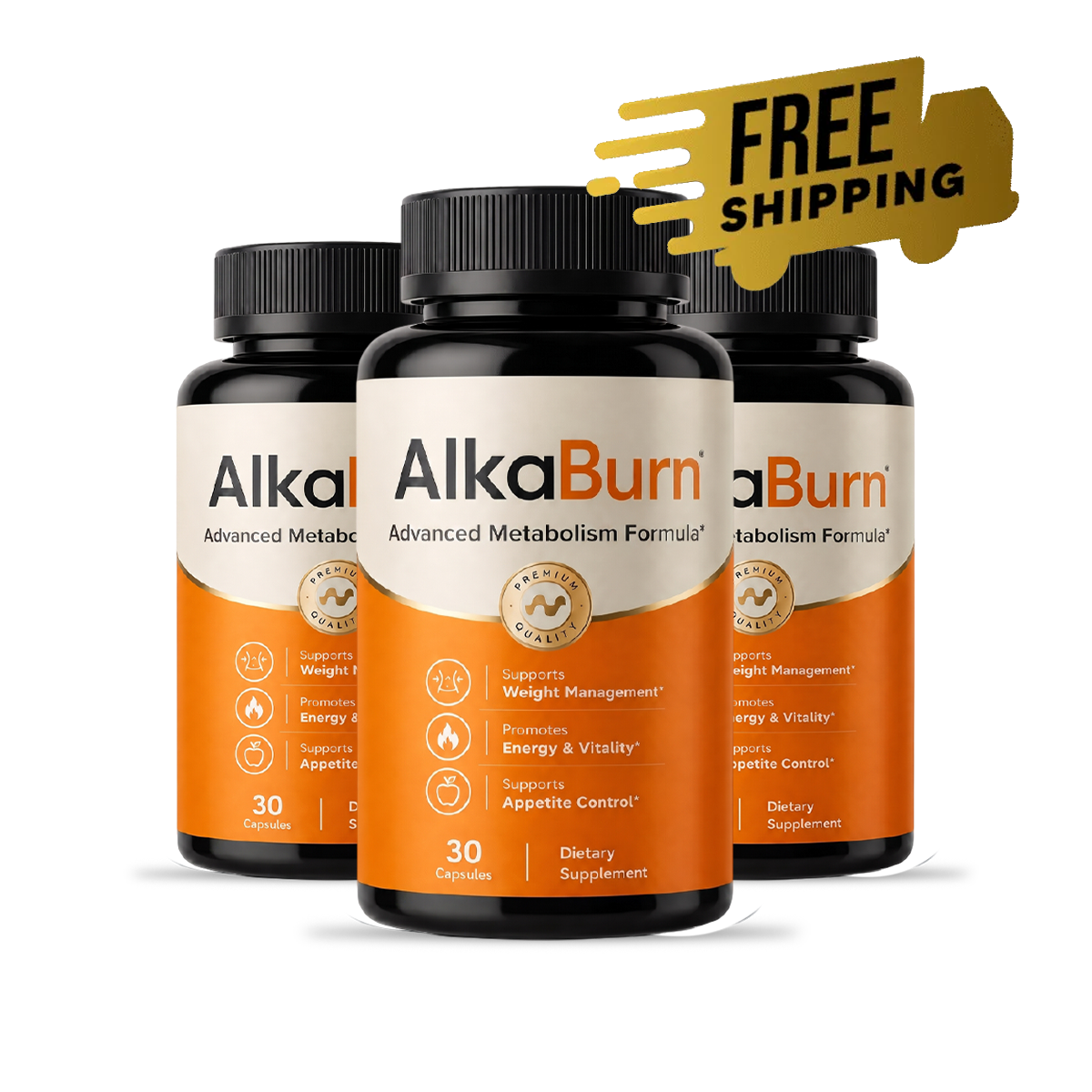
What are the ingredients in AlkaBurn?
AlkaBurn contains five actives: Caffeine Anhydrous, Green Coffee Bean Extract, Raspberry Ketone, Garcinia Extract and Green Tea Extract. Caffeine and green tea have moderate replicated evidence for modest thermogenic effects. Green coffee bean, raspberry ketone and garcinia have weak human evidence. Garcinia and concentrated green tea extract both carry documented liver-injury case reports.
On this page
Why we grade our own formula
A page rating every ingredient in a product as excellent is not an information page. It is a sales page with citations attached, and readers can tell.
So here are all five with an honest grade. Two come out well. Three do not. We would rather publish that than have you find it on a forum after you have ordered.
It is also commercially sensible. A buyer who understands that the caffeine and green tea are doing the work has accurate expectations, and accurate expectations are what prevent disappointed refund requests at day twenty.
Evidence at a glance
| Ingredient | Proposed action | Our grade | Key caution |
|---|---|---|---|
| Caffeine Anhydrous | Adenosine antagonism, thermogenesis | Moderate — replicated, modest | BP, arrhythmia, anxiety, sleep |
| Green Tea Extract | COMT inhibition, catechin synergy | Moderate — best with caffeine | Rare hepatotoxicity signal |
| Garcinia Extract | ATP citrate lyase, satiety | Weak — key RCT null | Liver injury case reports |
| Green Coffee Bean | Chlorogenic acid, glucose absorption | Weak — retracted trial | Contains caffeine; adds to total |
| Raspberry Ketone | Lipolysis, adiponectin (in vitro) | Weak — no human evidence | Few documented |
Caffeine Anhydrous — moderate
The ingredient doing most of the work, and the only one whose effects you will reliably notice.
Caffeine antagonises adenosine receptors, increasing catecholamine activity and raising resting energy expenditure and fat oxidation. These effects are replicated across many studies. They are also modest — a few percent — and subject to tolerance within weeks.
Its effect on perceived exertion during exercise is arguably more valuable than the thermogenic one, because it changes behaviour.
Cautions: raises heart rate and blood pressure. Not appropriate in uncontrolled hypertension, arrhythmia, anxiety or panic disorder without medical advice. Interacts with some medications including certain antibiotics, theophylline and MAOIs. Disrupts sleep if taken late, and short sleep drives appetite dysregulation — so poor timing turns this ingredient against you.
Count your total. This capsule plus your coffee plus a pre-workout is a stack, and the stack is what your cardiovascular system responds to.
Green Tea Extract — moderate
Standardised for catechins, principally EGCG. Its inclusion alongside caffeine is the best-designed part of this formula.
EGCG inhibits COMT, the enzyme that degrades noradrenaline. Caffeine raises noradrenaline activity; catechins slow its clearance. Studies of the combination have generally found larger effects on energy expenditure and fat oxidation than either alone. Effect sizes remain modest, and Cochrane's review of green tea preparations for weight loss concluded that effects are small and not clinically important.
The safety point: brewed green tea has an excellent safety record. Concentrated extracts do not carry the same profile. Rare cases of liver injury are documented in LiverTox, associated with high doses of concentrated extract, particularly taken fasted, with evidence of genetic susceptibility in some individuals.
Absolute risk at a modest dose within a multi-ingredient formula is low. It is not zero. Anyone with liver disease should avoid it, and the label direction to take the capsule with water before a meal is worth following rather than taking it fasted.
Garcinia Extract — weak
Garcinia cambogia, standardised for hydroxycitric acid. The proposed mechanism — inhibiting ATP citrate lyase to reduce de novo lipogenesis, plus a serotonergic satiety effect — is coherent on paper.
The clinical picture is considerably less encouraging. The best-known randomised controlled trial of garcinia for weight loss found no significant difference in weight or fat mass against placebo. Subsequent meta-analyses have found small effects with substantial heterogeneity and questions about study quality.
The safety history matters more. Garcinia has documented case reports of hepatotoxicity, and it was a component of a weight-loss product line subject to a major FDA-associated recall after liver injury reports. There have also been isolated reports of serotonin-related effects when combined with serotonergic medication.
We include this assessment because a reader deserves to know which parts of a formula rest on solid ground. This one does not.
Green Coffee Bean Extract — weak, with a documented credibility problem
This section is the reason this page exists, and it is the kind of thing most supplement sites will never tell you.
Green coffee bean extract became one of the most heavily promoted weight-loss ingredients of the last fifteen years on the back of a 2012 trial reporting substantial weight loss.
That trial was retracted. The Federal Trade Commission subsequently brought an action against the company that funded the research, and the resulting settlement concerned the reliability of the study underpinning the claims. Reporting of the case described data being altered and results shifting between analyses.
Independent research since has found effects that are small at best, with reviewers repeatedly noting that better-quality studies are needed.
The chlorogenic acid mechanism — slowing intestinal glucose absorption — is plausible. The evidence that it produces meaningful weight loss in humans is not established.
One practical note: green coffee bean extract contains caffeine of its own, which adds to the anhydrous caffeine in the formula. That is relevant to your total daily dose.
Raspberry Ketone — weak
The aromatic compound responsible for the smell of raspberries. Its weight-loss reputation is one of the clearest examples in the supplement industry of a mechanism being extrapolated far past the evidence.
The supporting research is cell-culture and rodent work, examining effects on lipolysis and adiponectin. The doses used in those studies, scaled to human size, are far beyond anything achievable through oral supplementation at typical amounts.
There is essentially no credible human trial evidence that raspberry ketone produces weight loss.
It is on this label. We are telling you it is the weakest ingredient in the formula, because the alternative is you reading it somewhere else and reasonably concluding that everything else we told you was also marketing.
What is absent, and why that matters
- No proprietary blend. Every compound named individually.
- No sibutramine, phenolphthalein or other undeclared pharmaceuticals. This is not a rhetorical point — the FDA database lists weight-loss products found adulterated with prescription drugs and banned substances, and it is the single strongest reason to buy only through verifiable channels in this category.
- No DMAA or similar unapproved stimulants.
- No diuretics. Some weight-loss products include them to produce fast scale movement that is entirely water.
The consolidated caution list
- Total caffeine. Capsule plus coffee plus pre-workout. Count it.
- Blood pressure and heart rhythm. Not appropriate in uncontrolled hypertension or arrhythmia without advice.
- Anxiety. Stimulants can substantially worsen anxiety and panic disorders.
- Liver. Green tea extract and garcinia both carry case reports. Avoid with liver disease; stop and seek care for unexplained fatigue, abdominal pain, dark urine or jaundice.
- Serotonergic medication. Discuss the garcinia content with your prescriber.
- Sleep. Take it in the morning.
- Pregnancy, nursing, under 18. Not suitable.
- Disordered eating history. Approach appetite suppressants with caution or avoid.
Frequently asked questions
Are exact milligram amounts published?
Each ingredient is named on the supplement facts panel of the bottle you receive, which is the authoritative document. We do not publish batch-specific amounts on the site, and by our own evaluation standards that is a fair criticism.
Why include ingredients with weak evidence?
That is a fair question and the honest answer is that this is a formula built to a category convention. We have chosen to grade them openly rather than defend them.
How much caffeine is in it?
Refer to the supplement facts panel on your bottle. Note that green coffee bean extract contributes additional caffeine beyond the anhydrous caffeine listed.
Is green tea extract safe?
Brewed tea is not the concern. Concentrated extracts carry a rare documented liver injury signal, particularly at high doses taken fasted. Avoid if you have liver disease.
Sources & further reading
- LiverTox, NIDDK — Green tea extract and Garcinia cambogia hepatotoxicity records.
- Federal Trade Commission — Enforcement action concerning green coffee bean weight-loss research.
- Cochrane Library — Green tea preparations for weight loss.
- NIH Office of Dietary Supplements — Dietary supplements for weight loss.
- US FDA — Tainted weight-loss products marketed as dietary supplements.