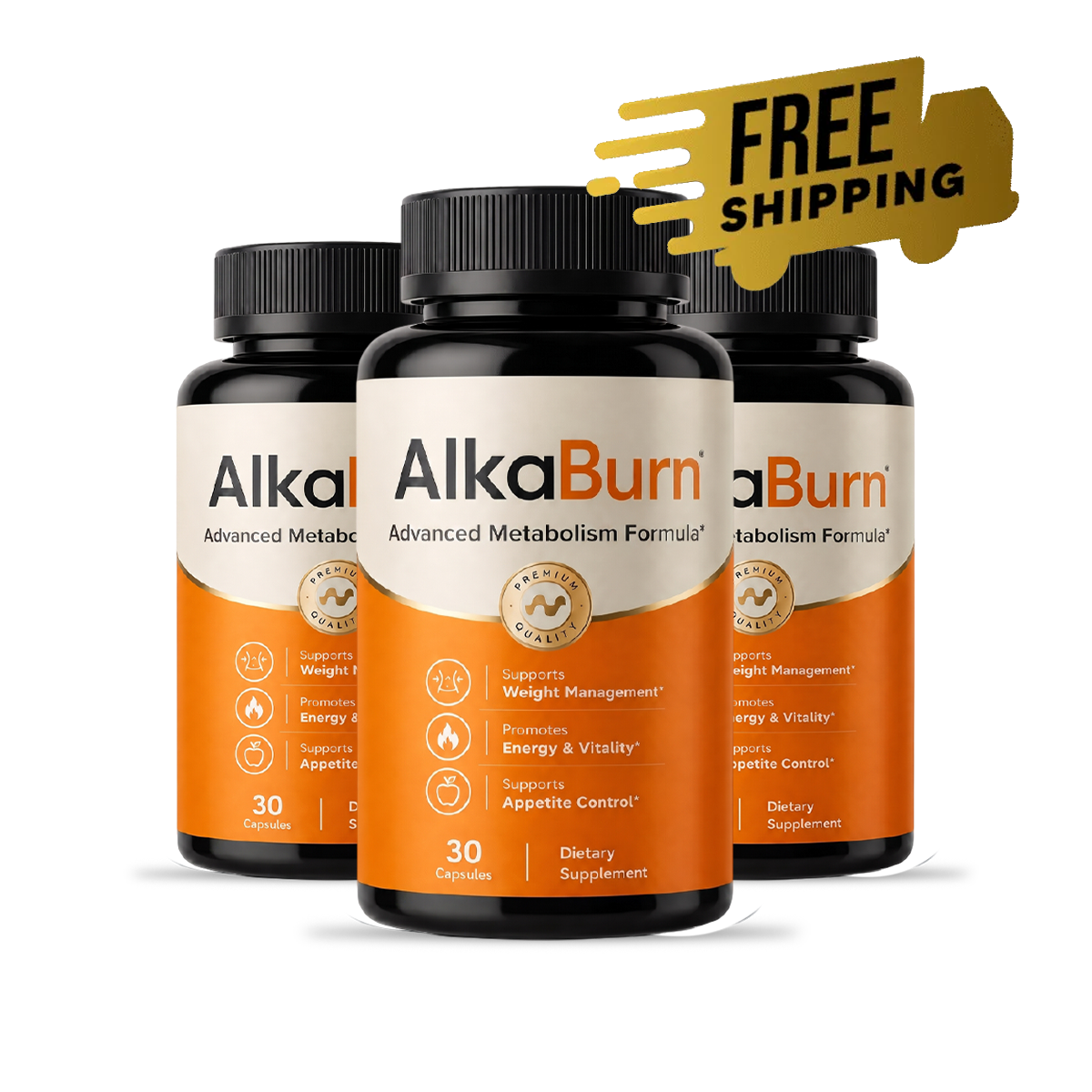
AlkaBurn: The Balanced Summary After Every Review On This Site
Twenty reviews, one aggregate picture, including the parts that do not flatter the product.
Editorial
Does AlkaBurn work?
Reported effects cluster consistently around an immediate caffeine-driven energy increase that fades with tolerance by around week six, appetite changes appearing between weeks two and four that prove more durable, and waist measurement changes preceding scale changes. Reported weight loss rates fall around 0.3 to 0.5 kg per week. Nearly every positive result also involved simultaneous dietary or activity changes.
What appears consistently
An immediate energy effect. Universal across reviews, arriving within an hour of the first capsule, and correctly attributed by thoughtful reviewers to caffeine rather than to anything metabolic.
Tolerance by week six. Reported by every reviewer who ran past a month, without exception. The energy effect diminishes substantially and does not return at the original intensity.
Appetite change, weeks two to four. Reported by most but not all, described as reduced evening eating rather than dramatic suppression, and consistently more durable than the energy effect.
Waist before scale. Every reviewer who tracked both reported measurements moving first, typically by two to three weeks.
Rates around 0.3 to 0.5 kg per week. Squarely in the range described as sustainable, and far below what category marketing implies.
What appears inconsistently or not at all
Anything in the first fortnight beyond caffeine. No reviewer reported meaningful body composition change in two weeks, because it is not possible.
Benefit for caffeine-sensitive people. Our caffeine-sensitive reviewer had a genuinely poor experience and stopped at day eighteen.
Results without dietary change. Our refund reviewer did not change his eating and lost 900 g in six and a half weeks, which is nothing.
Any effect attributable to raspberry ketone, garcinia or green coffee bean. Nothing in any account points to these, and the evidence says nothing should.
The confounder problem, stated plainly
This is the most important honest observation across the whole review set.
The 90-day reviewer started walking after dinner. The six-month reviewer cut 500 calories and tripled his step count. The over-50 reviewer increased protein by 40 g and started resistance training. The 95-day reviewer fixed her protein intake and walked. The doctor reviewer added protein and lifting on medical advice.
In almost every case where someone got a good result, they changed several things at once. That is not a flaw in the reviewers — it is what people do when they decide to take this seriously.
The most defensible reading across all of them: the appetite effect is the product's most reliable direct contribution, and much of the measured result flows downstream from the dietary and activity changes that the appetite effect and the energy effect made marginally easier to sustain.
That is a real contribution. It is also considerably more modest and more indirect than the marketing implies.
Decide whether you are a candidate
The benefits page describes exactly who this formula is built to help, and who it is not.
What consistently beats it
Every honest review here reached the same conclusion.
- A calorie deficit. Non-negotiable and unreplaceable.
- Protein intake. More satiating per calorie than anything in the capsule, and it preserves muscle during loss.
- Walking and step count. The cheapest meaningful lever on energy expenditure.
- Resistance training. Preserves the lean mass that determines your metabolic rate.
- Sleep. Measurably affects appetite hormones within days.
- Getting checked. Thyroid dysfunction, anaemia and vitamin D deficiency all present as fatigue and difficulty losing weight, and all are treatable.
The safety pattern
Every reviewer with a medical history or medication asked a clinician first, and in aggregate that is the most important thing on this page.
The over-50 reviewer's blood pressure rose for a month before settling. The reviewer on an SSRI needed a baseline liver test and specific monitoring for the garcinia. The caffeine-sensitive reviewer should not have taken it at all and says so.
Nobody had a serious adverse event. Everyone who could have was monitoring because they had asked first. That is what asking first buys you.
Who it suits
Reasonable candidate: a healthy adult already running a deficit, finding it hard to sustain, whose obstacle is evening eating or training adherence, who tolerates caffeine well, will reduce their other caffeine, has no cardiovascular, anxiety or liver concerns, and will take it daily for ninety days.
Poor candidate: anyone expecting it to replace dietary change, anyone caffeine-sensitive, anyone with the medical conditions listed across our safety pages, anyone with a disordered eating history, and anyone who will judge it at three weeks.
Pros and cons
What worked
- Appetite effect is the most consistently reported durable benefit
- Training adherence improves and holds better than the energy effect
- Fully disclosed formula with safety cautions published prominently
- Reported loss rates are sustainable rather than water-weight spikes
What did not
- Nearly every positive review is confounded by simultaneous changes
- Energy effect reliably fades by week six from tolerance
- Three of five ingredients contribute nothing detectable in any account
- Free interventions outperform it in every account that compared them
The verdict
Three things happen consistently: an immediate caffeine energy effect that fades by week six, an appetite change in weeks two to four that holds better, and waist measurements moving before the scale. Reported rates of 0.3 to 0.5 kg per week are normal and sustainable rather than dramatic. Nearly every positive result here is confounded by simultaneous diet and activity changes, and the most defensible reading is that the appetite effect is the reliable direct contribution with much of the rest flowing downstream from it.
Sources & further reading
- NIDDK — Weight management: evidence-based approaches.
- NIH Office of Dietary Supplements — Dietary supplements for weight loss.
- CDC — Healthy weight and sustainable rates of loss.
- Cochrane Library — Green tea preparations for weight loss.